How to calm driving test nerves
17 practical ways to stay calm before, during and after your driving test.
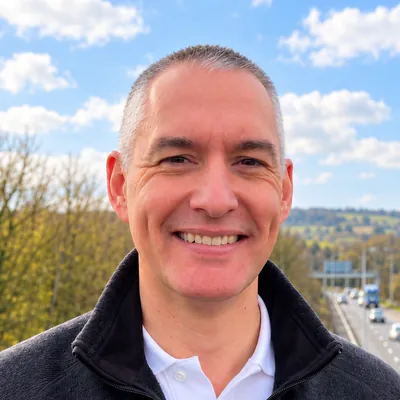 By Geoff Newman, driving instructor in Sevenoaks
Updated
One examiner told me that most driving tests are really a test of nerves. These answers are about staying calm and focused, whatever happens on the drive.
It would be odd not to feel nervous. These four things help:
Practise all four on lessons before the day.
Look forward, not back. Dwelling on a mistake is what usually causes the next one, because your attention leaves the road. Focus on the next junction and the next instruction, and do everything else to a high standard. Narrating your driving for a few moments can help.
Just because you think you made a mistake doesn't mean the examiner saw it, or saw it as a problem. I've been on many Sevenoaks tests where the learner was shocked to hear they'd passed. Your job isn't to mark yourself; it's to keep driving safely to the end.
It doesn't tell you anything on its own. Sometimes the examiner is simply recording that you've done a manoeuvre or pulled over; sometimes it's a fault. You can't know which, and trying to guess pulls your attention off the road. Ignore it and keep driving the way you've been trained.
Yes, as long as it doesn't distract you. If the examiner starts a light conversation, answer naturally rather than with one word, but let them lead it. Avoid personal questions and topics like politics or religion, and don't ask for driving help; you'll probably hear "do what you think is safe". Speak clearly so they can hear you over the engine. Typical topics are whether you've had far to travel, what you do, and whether you've enjoyed learning to drive. I suggest having an answer ready for that last one: "It's been a magical experience" usually gets a smile. Getting on well won't change your marks, and it's fine to stay quiet if talking distracts you.
You can, but for most people I don't recommend it, as it's one more thing to process. I generally don't recommend it for learners with ADHD either. The exception is very high anxiety, where low background music can quieten overthinking. If that's you, keep the volume low enough to hear every instruction, choose something calm, and try it on a mock test first.
Yes. There's no rule against it, and plenty of capable drivers mix up left and right, especially under pressure. If the examiner notices, they may offer to use hand signals as well as words. That's not a bad sign; they're simply helping you follow directions so you can concentrate on driving safely.
You need a basic working understanding of English, as instructions are given in English. If that's a real barrier, look into DVSA support well in advance. Examiners are very experienced with candidates from all backgrounds and will often speak more slowly, simplify their wording and use hand gestures. The language used on test is simpler and more repetitive than everyday conversation.
Usually overconfidence rather than ability. It tends to show as rushed observation, taking chances at junctions, pulling out in front of vehicles that are closer than they look, not giving cyclists enough room and assuming others will adapt to you.
Be more deliberate than usual. A technique that works well is to drive as if you're chauffeuring the examiner. UK roundabouts can also be unfamiliar, and Morleys Roundabout in Sevenoaks has a reputation for being challenging, so practise it.
17 practical ways to stay calm before, during and after your driving test.
What a mock test involves, and why it helps on the day.
Where to park, which door to use, what to bring and what to watch for when you drive away.
I'm Geoff Newman, a patient, calm driving instructor, born and raised in Sevenoaks, where I teach manual and automatic driving lessons in Sevenoaks. I'm the author of Sevenoaks Driving Test Secrets and a series of narrated videos that help learner drivers understand the Sevenoaks test routes. I taught my own sons to drive, and 88% of my learners' driving tests passed in 2026 (56 of 64 tests).
Tell me a little about the learner and when you'd like to start, and I'll get back to you.
Prefer email or WhatsApp?
No pressure, no obligations, just to see if we're a good fit.